










In the realm of men’s outerwear, few names command as much quiet reverence as Left Hand. Born in Bologna, Italy, in the early 1990s, the brand was a testament to its creator, Massimo Osti’s, relentless pursuit of innovation—a spirit that still ripples through clothing design today. Though Left Hand’s first lifespan was short-lived, its impact on technical garment design and its deep roots in Bologna’s culture of craft and experimentation cement it as a cult label whose legacy is more relevant than ever. And it is this legacy that continues to fuel the brand's modern incarnation.
Massimo Osti was no stranger to revolutionising fabric and function. As is well-documented, before Left Hand, he founded iconic labels like C.P. Company and Stone Island—brands that blended military utility with Osti’s unique, idiosyncratic flair, fundamentally transforming the language of casual menswear. But with Left Hand, launched in 1993 in Bologna, Osti pushed his textile experimentation further than ever before.
Even today, Italy is a country of cultural contrasts, having only been united towards the end of the 19th century. Each region has its own proud, independent spirit. When Osti was at his most prolific, Bologna was a hotbed of radical design thinking. Known for its intellectual leftist roots, strong cooperative networks, and a thriving textile industry, the city provided fertile ground for Osti’s unorthodox approach. In his early development, Osti’s studios were laboratories where function, form, and technology fused, producing garments that blurred the line between technical gear and everyday fashion. The name “Left Hand” itself nodded to Osti’s fascination with the avant-garde and perhaps to Bologna’s own political leanings—a subtle rebellion against the ordinary. It’s also suggested that Osti favouring his left hand when designing was a simpler explanation for the brand’s roots.
Regardless, Left Hand has yet to reach the commercial heights of Stone Island. Still, it has become an insider’s label, coveted by collectors who recognise the groundbreaking techniques embedded in its jackets, parkas, and over-shirts, right back to the time when Massimo was at the helm. Each piece was a masterclass in understated innovation: ergonomic cuts, hidden pockets, garment dyeing, and weatherproof finishes.
Despite its cult following, Left Hand shuttered in 1999, just a few years after its debut. The closure wasn’t due to a lack of creativity, but to the immense production costs and logistical challenges of manufacturing such avant-garde fabrics at scale. For Osti, the relentless push for newness often came at the expense of commercial sustainability—a trade-off that defined both his genius and the ephemeral lifespan of many of his projects.
Today, Left Hand’s influence resonates more strongly than ever, and not just in its own reborn form. In an era when technical outerwear has become mainstream—from Gore-Tex shells on city streets to luxury brands mimicking military surplus—the seeds Osti planted in Bologna continue to flourish. Many contemporary designers cite Osti’s work as a blueprint for blending technical performance with urban style. Brands like ACRONYM, Ten c (founded by former Osti collaborator Paul Harvey), and even newer players in the “gorpcore” movement owe a debt to the groundwork laid by Left Hand’s fearless material experiments in its most formative years.
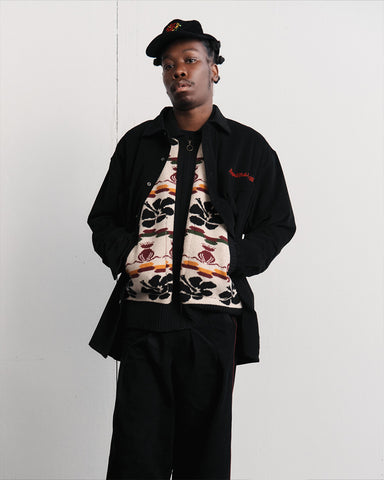
Left Hand today dials into the legacy built by its creator, crafting clothing that sits comfortably alongside the same aesthetic Osti became known for.
Brands today must represent more than a garment; they must tell a story. In Left Hand, you’ll find a piece of Bologna’s industrial and industrious soul, all filtered through modern-day sensibilities.


